Book summary · honest review
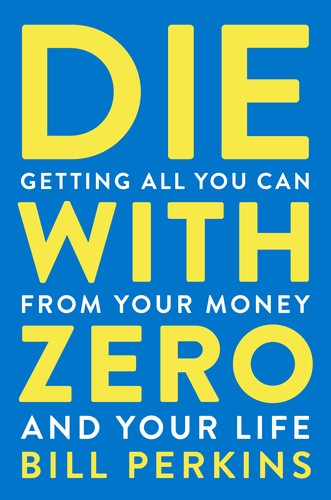
Die With Zero
Bill Perkins · first published 2020
A hedge-fund trader's case that most diligent savers are hoarding money they'll never use, at the cost of lives they'll never live.
What the book actually says
Perkins attacks personal finance from the opposite direction of nearly every other book: his data point is that most retirees die with large sums unspent, which he reads as years of work — of life — traded for nothing. His argument is that the goal isn't maximizing wealth but maximizing lifetime fulfillment, and that experiences should be deliberately scheduled for the ages when you can still enjoy them, because health declines faster than money runs out. He introduces the ideas that gave the book its following: experiences pay an ongoing dividend of memories, so buying them early compounds like an investment; your life divides into seasons in which certain experiences expire forever; inheritances should be given while your kids are young enough for the money to matter; and your net worth should peak somewhere between your mid-forties and age sixty, then be intentionally spent down. It resonated because it named a real failure mode — the diligent saver who never switches modes — and became the standard counterweight to hustle-and-hoard finance culture.
Who it's for
Best for disciplined savers in their 40s and 50s who won the accumulation game and can't bring themselves to stop playing it. Young readers with thin savings should treat it as a second book, not a first.
The honest criticism
The plan quietly assumes you can predict your lifespan and won't face a catastrophic long-term-care bill, and its fixes for that uncertainty — annuities and insurance — get far less scrutiny than everything else. It also reads easiest if, like Perkins, you're already rich enough that running out was never a real risk.
The 5 lessons worth keeping
- Dying with a large net worth means you overpaid in life energy. Money unspent at death represents years of work you didn't need to do, so plan to convert wealth into life while you can.
- Experiences pay a memory dividend that compounds. A trip taken at 30 gets re-enjoyed for fifty years, which is a reason to schedule meaningful experiences earlier than feels responsible.
- Every experience has an expiration date tied to your health. Sort your bucket list by the decade each item requires, and you'll find many expire far sooner than retirement.
- Give inheritances while they can still change a life. Money that reaches your children at 35 shapes their trajectory; the same money at 60 merely pads accounts they no longer need.
- Your net worth should have a deliberate peak. Decide when accumulation ends and spending down begins, because the default — saving forever out of habit and fear — is how people die with the most and lived the least.
Try the book's big idea with your numbers
Run your current savings rate through the retirement savings calculator and check whether you're on track to die with far more than zero — Perkins would call that a bug, not an achievement.
Open the calculatorMore money books, summarized
Last reviewed August 31, 2026. Figures based on the book itself (Die With Zero, Bill Perkins, 2020); this page is independent commentary and is not affiliated with the author or publisher. Estimates for general education, not financial advice.